For most anglers, the early morning hours on the water are calm, filled with quiet anticipation.
But for one team competing in the Mobile Big Game Fishing Club’s annual Billfish Limited tournament, 4 a.m. brought a surge of adrenaline.
Taylor Guidry, 27, noticed something unusual with his line. The reel clicker wasn’t on, so there was no telltale sound to alert the crew.
“I quickly realized the Shimano was moving,” Guidry explained. “That’s when I called everyone over.”
Within moments, his father Chad, cousin Justin, and Prime Time boat captain Steve Pixley were gathered, bracing for a fight with something that had already stripped out 2,000 feet of line.
A Battle at Sea
Reeling in a fish that size is no easy task.
The crew fought for an hour and a half, muscles straining as they worked together to bring in whatever monster lurked beneath.
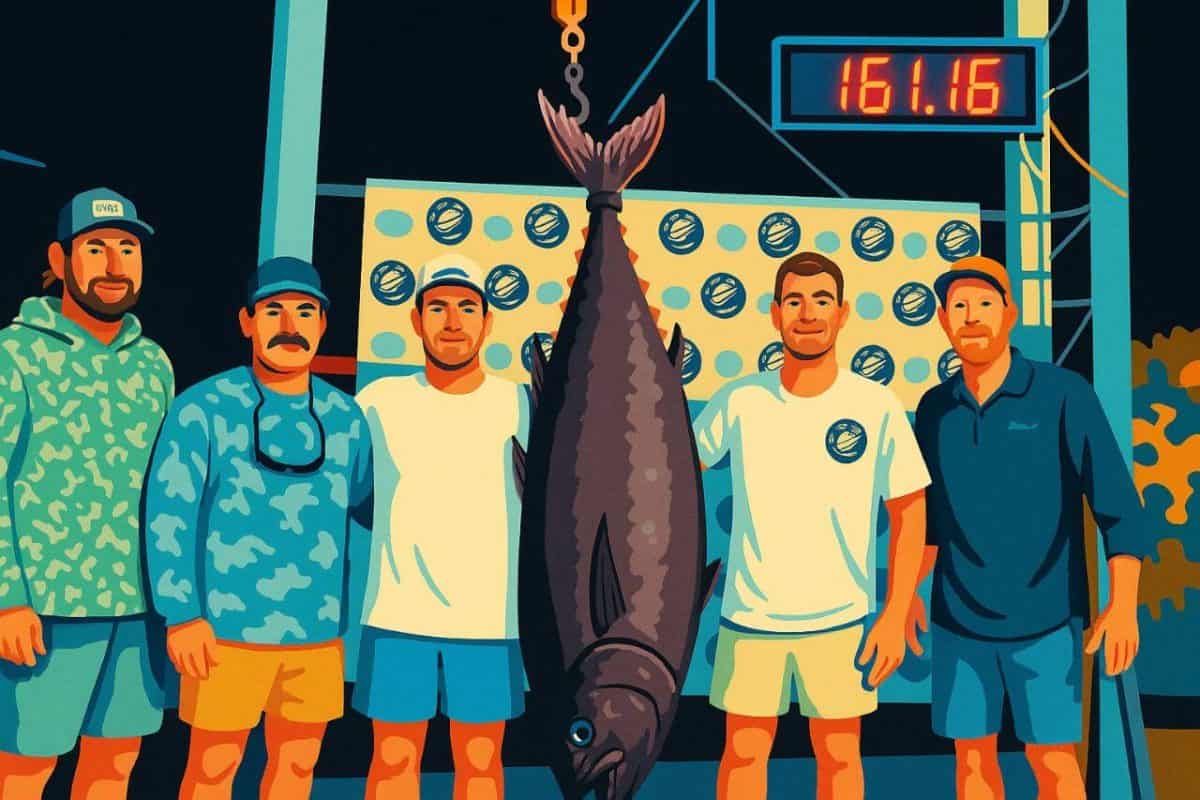
When the catch finally surfaced, jaws dropped: a 161.6-pound escolar.
“I didn’t even know they grew that big,” Pixley admitted. Getting the fish aboard was a challenge in itself.
“It took three of us to get it through the tuna door. Then it went wild on deck for about 15 minutes. None of us wanted to get too close while it thrashed. It was actually beating the boat up.”
Breaking Records
According to Alabama’s official saltwater fishing records, the previous state record for escolar was 102 pounds, 10 ounces.
That fish had been landed less than a year earlier in September 2023.
This catch—nearly 60 pounds heavier—appears to have set a new benchmark.
The Prime Time crew weighed their fish at the tournament in Alabama, and paperwork has been submitted for confirmation.
For competitive anglers, setting a state record is the kind of achievement that echoes for years. It cements a tournament story into fishing lore.
From Deck to Discovery
Instead of saving the fish for the grill, the crew made a different choice. “Escolars are good to eat,” Guidry said, “but we donated this one to the scientific community.”
Large specimens are rare, and a fish of this size offers researchers valuable insight.
It’s a gesture that shifts a big catch into something even more meaningful—contributing knowledge to the broader fishing and marine biology world.
Guidry also wanted a lasting memory of his achievement. Rather than a traditional mount, he commissioned an ink print of the entire fish, created by artist Harley Van Hyning on canvas.
“That’s really better,” Guidry said. “Harley is the best at what he does.”
The Ripple Effect
Stories like this don’t just stay on the water. They ripple outward, fueling the excitement around local tournaments and giving anglers across the Gulf something to dream about.
The idea that a record-breaking fish could be lurking miles offshore keeps the community inspired and ready for their own shot at glory.
It’s also a reminder of the unpredictability of the Gulf’s waters. One morning, you’re chasing a typical bite; the next, you’re battling a fish so powerful it takes three men to pull it on board.
For those who live close to the coast, that element of surprise is part of the magic—never knowing when a routine trip will turn into a once-in-a-lifetime story.
For Guidry, Pixley, and the Prime Time crew, August 1 will be remembered as the day they didn’t just hook a fish—they reeled in history.
If you’d like to check out other news stories, hop over to our news corner.